ABOUT PROCESS
PROPEL is focused primarily on educating and advocating for policy issues that can help San Francisco solve socio-economic problems more equitably, and ensure all our communities are thriving. We’re also a 501c4, though, so we do have thoughts about candidates – although you won’t often find us wading into debates about people specifically. We would welcome the opportunity to have any politician or community leader take up the progressive policies we’re promoting – but also know it requires political courage and hearing from everyday San Franciscans ready to hold politicians accountable. We all have a role to play! The candidates reflected in these endorsements are those who have proven themselves able to walk the talk – and at minimum, will be independent public servants representing their constituents and not corporate donors.
PROPEL’s Board of Directors voted last month to forward the below endorsements – thanks to those of you who wrote in with comments or questions in advance of the vote. *(Please note: if you don’t see a candidate race reflected, that’s because the Board voted to wait until after the June primary to weigh in with an endorsement. Please also note that the Congressional race is NOT ranked choice – you get one vote, so make it count, and vote for Connie Chan!)
June 2, 2026 Primary Voting Info
Register to Vote at any Post Office or online at RegisterToVote.ca.gov. If you’re registered by May 18th, you’ll get a ballot in the mail. But in SF, you can always register in person at City Hall up until Election Day. You can also register at any polling place on Election Day: just ask to cast a provisional ballot. Call 415-554-4375 for more info.
WHEN?
May 4th: Early voting starts at City Hall, weekdays 8am–5pm (closed May 25th).
May 23rd: Weekend early voting starts at City Hall, Saturdays and Sundays 10am–4pm.
June 2nd: Election Day! Polls open 7am–8pm. If you’re in line by 8pm, you can vote. You can also drop your ballot off at any polling place on Election Day.
WHERE?
Everyone will get a ballot in the mail! Make sure yours is coming to the right place by checking your registration at SFElections.org.
Mail your ballot, if you can't drop it off. You don't need a stamp, but make sure you sign the envelope and that it's postmarked by June 2nd.
Drop off your ballot early at one of the 37 official ballot drop boxes across the City, from May 4th through 8pm on Election Day, June 2nd.
Where’s your polling place? Check https://SFelections.org/tools/map_poll_time/, call 311, or just go vote at City Hall.
WHAT ELSE?
Did you forget to register? You can still vote! Go to City Hall or your polling place and tell them you want to "register conditionally and vote provisionally!"
People with felony convictions can vote! You can vote even if you’re on parole. Re-register at Restore Your Vote.
Youth can (almost) vote! If you’re 16 or 17, pre-register to vote and your registration will automatically be activated when you turn 18.
Are there any other voter guides that PROPEL is aligned with or that provide substantive research on issues? YES! Check out SF League of Pissed Off Voters’ always-informative and thoughtful voter guide, complete with Cheat Sheet for the polls. (And DON’T get tricked by imposters or immitators - there’s only one SFLOPV, and it’s NOT run by multi-millionaire Super PACs!)
PROPEL June 2, 2026 Endorsements
PROP A: $535M Earthquake Safety and Emergency Response Bond
— Yes, but holding our noses because… 😤 DO BETTER, CITY HALL.
Here’s the thing: of course San Franciscans are going to vote for the ESER bond. No one is going to vote against something that purports to fund the difference between life or death, and no mayor in modern history has ever lost a major General Obligation bond for infrastructure – (except London Breed, who effectively tanked the $400M Muni bond in 2022.) But, literally, it’s almost impossible to lose.
Which is why government has become increasingly lazy with its approach to vetting these major capital infrastructure measures, which often become a “beauty contest” for each Department’s pet projects. (Fun Fact: The Capital Planning Committee that is tasked with vetting the City’s 10 YR Capital Plan and identifying the schedule of GO bonds that fund said plan includes almost every major infrastructure and finance department head – except the Department of Emergency Management. So, while the Parks Bond is led by the Rec & Park Dept and the Muni Bond is led by the SFMTA, the Earthquake Safety & Emergency Response bond is NOT led by the same department we entrusted to run the city during the pandemic…they don’t even get a vote. Which is why we see a lot of pork projects, but still have not replaced the emergency sirens London Breed promised to fund after the devastating fire in Lahina.)
In this case, Prop A certainly has worthwhile projects that should legitimately be funded. And because the City only issues as much debt as it retires, the City’s property taxes are not expected to increase in order to deliver this infrastructure. But whereas we used to have a Board of Supervisors that looked closely at these funding categories to ensure the best package possible, the current legislature has largely rubber-stamped laws and ballot measures without asking basic oversight questions or challenging assumptions.
One glaring example: the bond allocates $200M for a teardown and rebuild of the Potrero Muni bus yard, a massive public parcel that per 2015’s Proposition K, copious Transit Oriented Development (TOD) rezonings and the SFMTA’s own capital plan, should have been prioritized for significant affordable housing – especially now that our buses have been electrified, allowing us to safely build housing on top of active bus yards. In fact, SFMTA spent years hosting community meetings with an approved developer promising the large site would generate 465 units of affordable housing. Not only are these units desperately needed in the Mission neighborhood where many working class families have been pushed out, but San Francisco actually counted these units in its Housing Element in an effort to convince the state’s Department of Housing & Community Development that we were compliant and serious about building affordable housing.
Late last year, the SFMTA announced its decision to kill 365 of the promised units. The excuses ranged from the SFMTA’s broken budget (newsflash, the SFMTA budget was also bad when the developer was selected in 2022) to value-engineering that revealed the podium needed to support earthquake-safe housing over a resilient transit facility would cost an estimated $70 million. (Guess how much SFPD is getting for unspecified upgrades to its facilities in this bond? Yes, $72 million, for the most expensive city department, including to the Taraval Station in the Sunset, where the Mayor and his allies are pouring millions into the District 4 Supervisor race for their candidate, Alan Wong. Just saying!)
Of course, the nature of politics demands that politicians are strategic and pad their measures with whatever will most increase the chances of voter support. We can accept this reality. What is frustrating about this particular example is that the Mayor literally hired 4 Deputy Mayors to ensure the interdepartmental trouble-shooting and coordination of projects just like this. There was never any public discussion (or private discussion, by all accounts) between his Deputy of Housing and Economic Development and his Deputy of Transit Mobility. Our own State Senator, who has been a champion for transit investment and pushed through more zoning bills than anyone in the State legislature – allegedly to build projects like this – did not even appear to know what was happening with the City’s about-face when asked at a recent community meeting. Our Board of Supervisors President, who has a critical seat on the Capital Planning Committee, also didn’t seem interested in trouble-shooting this despite it being his job. At this point, the total estimated cost to tear down and rebuild the Potrero bus yard is approximately $700M (and growing) – that doesn’t even include the cost of housing! And, oh yes, we still need to make up the 365 units we promised the State were accounted for in our Housing Element. It’s just a sad and frustrating state of affairs – and voters really deserve better. (Especially as the City Controller’s latest report reveals that San Francisco will max out its borrowing capacity in less than six years, and one potential solution could be raising property taxes…I’m sure most voters would rather tax the rich or just have politicians do their jobs…)
So, sure, vote for Prop A
– but our elected officials must do better. Even the bare minimum of engagement, at this point. That means: Ask tough questions. Make amendments. Challenge Department assumptions. Meet with the community, weigh alternatives, move some projects back or phase them. Get creative. Work with our State Legislative Delegation so we’re not pitting essential infrastructure against itself, like housing and transit. Cobble together other funding sources. Fewer TikToks, more work!
A Prop A “YES” Vote Allocates:
EMERGENCY FIREFIGHTING WATER SYSTEM on WESTSIDE – $130M
FIRE STATION UPGRADES – $100M
SFPD FACILITIES UPGRADES – $72M
POTRERO MUNI YARD TEARDOWN & REBUILD – $200M
MISC. MYSTERY “PUBLIC FACILITIES” UPGRADES – $33M
PROP B: Lifetime Term Limits for Mayor and the Board of Supervisors — NO!
Perhaps the reason that our Board of Supervisors are not getting much done in the way of actual policy work is because they are advancing stupid “solutions-looking-for-problems”, like Prop B. This pointless measure, sponsored by Supervisor Bilal Mahmood, would tweak the term-limit rules for the Board of Supervisor and Mayor, instituting a lifetime ban after you serve two terms. (Currently, the City Charter stipulates term limits for two consecutive terms for Mayor and Supervisor – meaning that, either position could serve a full two consecutive terms, then sit out of office for another four years, then attempt to run again.)
And guess how often this has happened? No Mayor has ever run again after serving two terms. Only four former Supervisors have ever tried to run after sitting out four years or longer, and only one of them won. (Yes, that person was Aaron Peskin, who was drafted by community to run against the then-Mayor’s rubber stamp appointee on an affordability platform, and clocked a resounding win with widespread voter support, as detailed in the documentary“Company Town”. In other words – voters somehow managed to make an informed decision, shocking!)
Meanwhile, attempts to amend Prop B to include term limits for City Attorney, District Attorney, Assessor, and Treasurer positions (which currently have none), were voted down at the Board of Supervisors before Prop B was placed on the ballot. These positions are actually the least competitive positions out of all the elected posts, and arguably the most in need of term limits, as politicians often get comfortable in near-lifetime posts without pressure to keep them accountable.
Something is seriously wrong with our local politicians if they even remotely think that this is a problem that somehow takes precedence over addressing the affordability, health or homeless crises. Instead it’s a distraction clogging up our ballot, and being used to attract rightwing funds into an election with a progressive tax on the ballot they want to tank, among other things.
Proponents of Prop B have claimed several disingenuous reasons for the measure, including that it’s necessary to “give young people a chance in politics”. Oh, honey… if you think the biggest obstacle to young people’s engagement in politics is the possibility that someone might run for a third non-consecutive term that denies them their fair shot, you are most definitely part of the problem. The biggest barrier to young people running for office is undoubtedly a financial one, given the gross glut of unregulated Big Money in local elections. If proponents would like to encourage young people to run for office, they could work to get SuperPAC money out of local politics. They could support Vote16’s attempts to lower the voting threshold, and encourage civic engagement and political engagement at an earlier age. They could stop embracing toxic bullies like Garry Tan or admitted attempted rapists like Jay Cheng to be the public face of their “political advocacy”. Basically, like a bunch of other real ways that don’t look like Prop B.
By far the worst and most fraudulent claim, though, is that Prop B is somehow akin to stopping Trump’s naked attempts to serve as an unconstitutional forever President. Which would be hilarious if it wasn’t so grossly insulting to voters’ intelligence, given that some of the same people funding Prop B’s frivolous campaign are currying favor with Trump and his horrific far-right administration.
A review of the donors backing the $347K Yes on Prop B campaign reveal the real purpose of this measure – crypto billionaires, anti-consumer Republicans, Big Real Estate and surveillance state zealots do not want an effective progressive like Aaron Peskin to run again. It’s that simple – and that petty.
Sure, Washington, DC has seen a concerted attempt from Establishment Corporate Dems to block young progressive leadership – and Prop B backers would do well to devote resources to supporting leaders like David Hogg, of March For Our Lives, and other up-and-coming voices. But is this a local problem that needs hundreds of thousands of dollars to buy our votes in June?
Nope. Vote No on this waste of time.
PROP C: Decreases to Business Taxes — NO!
PROP D: Overpaid CEO Tax — YES!
IMPORTANT: Between Props C and D, only one can pass. Each has a poison pill that cancels the other, so the one that gets the most votes over 50% will go into effect. We hope it will be Prop D, the Overpaid CEO Tax.
But wait: didn’t we just vote on a big kumbaya business tax reform measure? The answer is “yes”, 69% of voters passed Prop M in November 2024, which was a comprehensive overhaul of the City’s complicated business tax structure. As a matter of principle and good policy, we would not support another massive overhaul of the tax system so soon after the last election – but there are several reasons we’re Yes on Prop D and voting No on Prop C.
The first is that Prop D is not a comprehensive overhaul of our business tax, but rather strengthens our existing CEO tax approved by voters in 2022 (but then decreased in 2024’s Prop M) to rightsize rampant financial inequality and ensure companies aren’t exploiting loopholes to avoid the tax. Prop D would apply to corporations with at least 1,000 employees and more than $1B in revenue, where their highest-paid managerial CEO earns more than 100 times the median compensation paid to the rest of staff. (Read: basically the top uber-wealthy who make so much money that they couldn’t even spend it all if they tried…). It also restores the top executive pay tax rates to their 2018 levels and introduces a voter approval requirement for future changes to the tax rates.
Major urban cities from New York to Seattle are embracing progressive tax measures as a means to mitigate the devastation and divestment of Trump’s Big Bad Bill. Sadly, these days in San Francisco, the most expensive city in the United States, our local government still believes the best way to fund public services is through regressive taxes on everyday San Franciscans –while giving tax breaks to billionaires. Economist Robert Reich released a jaw-dropping analysis last year that revealed CEO pay is up 1,085% since 1978 – while American workers have seen a barely-there 24% increase by comparison.
That is B🍌A🍌N🍌A🍌N🍌A🍌S!
At a time when unregulated companies are enjoying premium tax breaks while Medicare, childcare and senior programs are being gouged, Prop D is the rational restoration of something voters already approved in 2018 that the City estimates would bring in between $250M-$300M new revenue annually.
Prop D was put on the ballot for just this reason. The Chamber of Commerce, buoyed by $4.1M of SuperPAC funny money (hmmm, the top donors look familiar! Same as Prop B!) put Prop C on the ballot to confuse voters and hopefully tank Prop D. And while Prop C does raise the gross receipts tax exemption threshold for small-ish businesses making between $5 and $7.5 million in sales per year, it would increase taxes on a range of other businesses, thus doing more to undo Prop M’s grand compromise approved by voters than anything else being proposed. SuperPAC’s like GrowSF and other shady backers have attempted every excuse in the book as to why this is a bad idea – including that it’s not enforceable and won’t bring in funding as intended. Fact check: the original less fool-proof CEO Tax from 2020 brought in an estimated $206 million of revenue in FY2022-2023, averaging roughly $137 million annually before it was reduced – but keep on signaling to Big Business that they should try to get around city enforcement, yikes! These spin doctors also want voters to think. Prop C’s backers want voters to think that this is about including more businesses under the “small business umbrella”, but really it’s about stopping progressive taxation in its tracks and shifting the burden from multi-millionaires and billionaires to everyday San Franciscans (who actually power small businesses). That’s why San Francisco advocacy group Small Business Forward has also endorsed “No on C, YES on D!” – don’t buy the spin!
We know it’s exhausting to always be fending off attacks from the Corparados and Big Tech oligarchs but your vote really counts! Remember, if C gets more votes than D, we will have missed out on a critical stabilizing effort for our beleaguered budget.
Vote NO on C and YES on D.

Congress, U.S. House, California District 11 — Connie Chan
Remember: You can only vote for one candidate for Congress! It’s not a ranked choice race. If you vote for multiple candidates, your ballot will be thrown out.
We’ve had our share of critiques of Nancy Pelosi’s tenure in D.C., but it is undeniable that she has been a champion for San Francisco, leaving big shoes to fill. This will be the first open Congressional race San Francisco has seen in over 40 years and the road to a House majority runs through California, with District 11 playing a critical role. Pelosi leaves behind a legacy of budgetary and negotiation chops, bolstered by real conviction and fight.
There are three leading candidates in this top-two primary: State Senator Scott Wiener, tech centi-millionaire Saikat Chakrabarti, and Supervisor Connie Chan.
We’re supporting Connie Chan for Congress, a legislator who represents what we love about San Francisco – and everything Trump is trying to dismantle. Connie is a strong woman, an immigrant, and a working mom – all perspectives sorely lacking in Washington, D.C. Connie has proven herself as a lifelong public servant, working as a community organizer and then senior staff in a wide range of city departments before serving as a legislative aide and now a twice-elected Supervisor. She and her partner, a SF firefighter, are raising their kid in the Richmond. As a family, they’ve dealt with all the struggles that many San Francisco families can relate to: soaring cost of living, unreliable and expensive childcare, ballooning health care costs, and taking care of aging parents.
As a Supervisor, Connie has consistently been a champion for renters, immigrants, small businesses, seniors, SF schools, the environment, and working families citywide. She has proven to be a skillful Budget Chair, who has used her negotiating prowess and relentless attention to detail to maximize funding for essential city services, and SF programs most impacted by Trump cuts. She is a fighter, and not afraid to call out bullies and stand up to toxic bro behavior that has increasingly permeated the second floor at City Hall – including when people have underestimated her intelligence or skills because of her accent. She is quick and hard-hitting – and still manages to legislate with compassion, empathy and a great sense of humor.
She has helped launch landmark progressive initiatives like Free City College, immigrant protections, a Fund for arts & culture preservation, wage theft enforcement, programs to repurpose city property for affordable housing, and progressive tax policies (Yes, she is a lead supporter of Prop D!). Her longtime support for single-payer healthcare before it was a hot progressive cause is one of the many reasons she’s the sole endorsement of the CA Nurses.
Connie is supported by an impressive roster of neighborhood groups, elected leaders and labor unions (no small thing to get the support of the SF Labor Council, who don’t often agree on much…) Her experience has even received a vote of confidence from Nancy Pelosi.
While Scott Wiener and Saikat Chakrabarti are both clearly smart and talk a good game, their ties to Big Tech and Big Real Estate are exactly the wrong direction for San Francisco. The millions flowing into this race are evidence of who these men will be accountable to, and San Francisco and the nation have too much at stake to rubber stamp a seat that will be held for the next few generations. We need a fighter who will not only roll back Trump policies but refuse to settle for the status quo of the before times. It’s not just repeal and revoke Trump – it’s replace with a bold new vision for a more equitable and more affordable San Francisco and country.
Reminder: The race for Congress is not ranked choice, and marking a #2 candidate will invalidate your vote.
Connie for Congress!

State Insurance Commissioner — Jane Kim
Jane Kim, the former S.F. supervisor and California director of the Working Families Party, is taking her progressive policy nerd bona fides to the insurance sector! The state Insurance Commissioner regulates the nation’s largest property and casualty insurance market, approves premium rate increases, and regulates life, health, and workers’ comp insurance. It’s a very important but under-leveraged and un-sexy post, which means it doesn’t get the accountability focus it deserves. We’ve seen firsthand how Californians suffer when a California Insurance Commissioner – (Ricardo Lara, looking at you!) – mishandles the state’s home insurance crisis and prioritizes insurance industry interests over consumers. Skyrocketing premiums, year-round natural disasters, rising FAIR Plan enrollment, and brazen cozy ties with insurers are all the hallmark of bad policies and worse politicians – it’s time for a bad-ass fighter who will use this position to improve the lives of working families in California.
Known for her landmark policies to fund Free City College and Free Childcare for All, Jane Kim is running on a people-over-profits platform. Her proposal to create a public insurer for natural disasters, much like the system in New Zealand, is a bold plan that if anyone can get done – it’s Jane! Same idea for auto insurance, in a state where rates have risen by over 30% since 2022. She’s also proposing a statewide coverage calculator and a Medicare for Kids plan. We love a policy nerd, but it’s even better when they’re an experienced legislator and community organizer who actually knows how to translate ideas into action.
Go Get ‘Em, Jane!
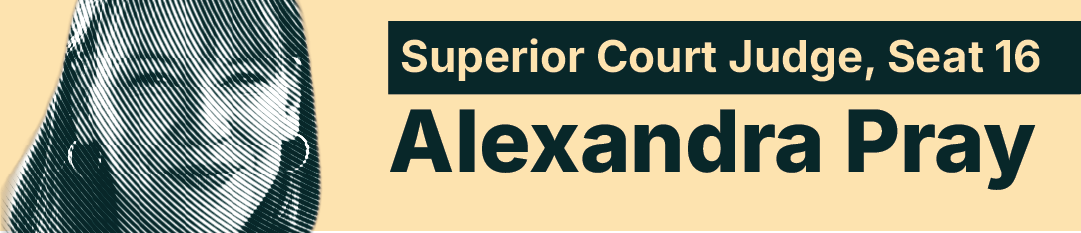
Judge of the Superior Court, Seat 16 — Alexandra Pray
The independent judiciary continues to be under attack in Trump’s America, and San Francisco is not immune, including the relentless politicization and threats against sitting judges. Thus far, San Francisco voters have repudiated attacks on our SF Superior Court. Regardless of your political leanings, we should all want qualified judges that understand and are committed to the rule of law, adhere to fierce independence, and are prepared to administer justice with critical thinking, emotional maturity, and a desire to see people rehabilitated whenever possible.
Raised in a law enforcement family, Alexandra Pray is a trial attorney with experience in lengthy criminal trials during her 15 years at the S.F. Public Defender's Office – (she’s tried over 50 cases) – and during that time she has worked with all elements of the criminal justice system to understand what’s working and what’s not — including prosecutors, judges, and within the drug courts and community justice courts. She has endorsements from an impressive array of judges, including the Presiding Judge Rochelle East and Judge Michael Isaku Begert, who was chosen by Gov. Newsom to build and lead the CARE court. All of her endorsers have stressed her collaborative nature, integrity, and adherence to the highest ethical standards.
Alexandra’s competition, Assistant DA Phoebe Maffei, is a politically-connected career prosecutor, and she and her husband have contributed the maximum amount to the campaigns of Brooke Jenkins for DA and Mark Farrell for Mayor, who have both had legal and ethicalproblems. As a candidate, Maffei has accepted tens of thousands of dollars from the SF Deputy Sheriff's Association and the SF Police Officers Association, both of which have been embroiled in numerous scandals and excessive brutality cases. (Frankly, a judicial candidate accepting money from law enforcement and other sectors that could have future matters before the court should be disqualifying, but in the absence of campaign finance reforms, ethical judicial candidates should just refuse the money. 😑)
Since judge races for local counties are regulated by the state, there are no campaign contribution limits, which is horrible policy for producing a fair and impartial judicial system. Sadly, as a result of this gross loophole, we can expect to see billionaires continue to invest unlimited money in reliable “hanging judges” who will protect their property, way of life and financial interests. We are watching our democratic systems unravel at the national level, thanks to unchecked practices like this – and we are all paying the price.
Alexandra Pray is the most qualified candidate in this race. She's done significant work for the PD office's research unit, looking for faulty judicial rulings that might cause a case to succeed in the Court of Appeal. And as the only candidate who has represented individual people as clients, public defender Alexandra is the right pick to balance the Superior Court's extreme over-representation of corporate attorneys and former prosecutors.
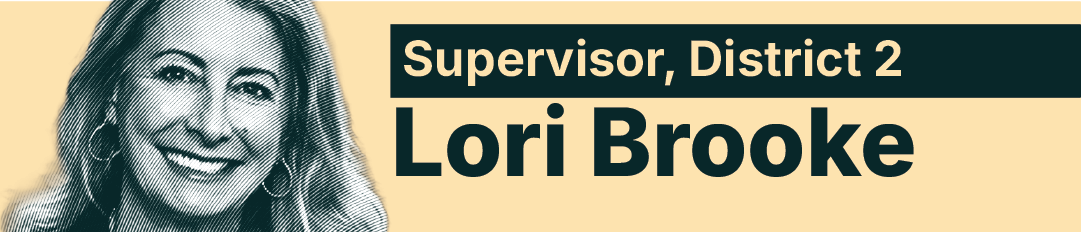
District 2 Supervisor — Lori Brooke
District 2 continues to be one of the most expensive and conservative districts in San Francisco – but it’s also a critical vote on the Board of Supervisors, the legislative body tasked with providing checks and balances to the Mayor’s Office and representing the diverse neighborhood perspectives of the city. Neighborhood leader Lori Brooke is the clear choice for an independent voice at City Hall, over the appointed incumbent and former London Breed staffer, Stephen Sherrill.
We don’t agree with all of Lori Brooke’s positions, and certainly would not characterize her as a progressive. But as a mom who cares about whether her children will be able to continue living as adults in the city they were raised in, we know she will be a strong voice to protect rent-controlled housing and tenants. We share her concerns about the massive special interest overreach into local SF politics, and the lack of thoughtful regulation to mitigate Big Tech’s negative impacts. She has been a reasoned critic of Mayor Lurie’s privatization approach to government, and believes neighborhoods should have a meaningful voice in public policy decisions. She was also a lead organizer of RescueSF, which hosted neighborhood meetings with City Departments and policy experts to understand “compassionate and effective solutions to homelessness.” Lori came to those meetings armed with research and a genuine desire to understand how neighborhoods could support the City’s work to address this crisis. Contrast that with her opponent’s one claim to fame, running former Mayor London Breed’s Office of Innovation tasked with “innovating solutions to homelessness” – well, we don’t even know what that word salad is supposed to mean or what Stephen got accomplished.
Stephen Sherrill, (who former Mayor London Breed allegedly unethically appointed in exchange for a "civic innovation advisor-in-residence" position at Bloomberg-connected Aspen Institute, is heavy on wealthy connections but light on policy. His dad is a right wing Republican mega-donor, and Sherill himself is a former Republican who interned in the Bush White House (he blamed government bureaucracy for the fact that he only registered as a Democrat last year, claiming he didn’t know what box he’d checked because the original form wasn’t clear 🙄). Adding insult to injury, he has opposed housing in his district, prescribing a “not for me, only for thee” approach to equitable development in alignment with Mayor Lurie’s position.
The Board of Supervisors need an injection of strong women to cut through the tech-bro culture at City Hall – and Lori Brooke will be a strong independent voice for her district, which she believes shouldn’t be for sale.

District 4 Supervisor — Natalie Gee
Natalie Gee is far and away the most qualified person for this job – and Lord knows the Sunset District deserves a competent and community-oriented neighborhood representative after years of mistreatment and botched attempts at governance.
A San Francisco native who grew up in public schools, Natalie understands San Francisco’s diverse communities and the unique challenges they all face. As the bifluent daughter of immigrants, she understands well the needs and contributions of immigrants to San Francisco, and Chinese representation is important for a City whose population is more than 23% Chinese. As a community organizer from a young age, she has championed programs and resources for youth and children, workers, seniors, immigrants, transit riders, survivors and, yes – even gamers looking to positively build community through Pokemon events.
As a legislative aide, she has co-authored legislation to ensure language access in public programs and processes, and has also helped build up community policing models that help restore trust between SFPD and residents. Her organizing and advocacy at the Board of Supervisors and SFMTA Board helped to restore service cuts to essential cross-city bus lines, and she has proven to be a valuable addition to budget deliberations, restoring money for critical programs. As a leader in her union, IFPTE Local 21, she has led public education campaigns around wage theft and workers’ rights. This depth of experience and ability to collaborate with a wide range of constituencies will serve her well as Supervisor – she was even endorsed by the lead organizer for the Sunset Dunes, despite her opposition to the full and permanent closure of the Great Highway.
Her main competitor is the Mayor’s (latest) appointee, Alan Wong, who previously served on the City College Board, where he proved an unreliable progressive vote. More disturbing, though, is the insane amount of right-wing billionaire funding (to the tune of over $1.5 million dollars) flooding in to support him through unlimited independent expenditures and direct contributions – and this is just for the June special election! We haven’t even gotten to November! Alan has already proven himself to be a rubber-stamp for the Mayor, and even voted on a massive upzoning proposal for his entire district without engaging with the community on its lack of protections for small businesses and tenants – on his second day in office.
It’s time for District 4 to have real representation. Natalie is someone who understands governance and policy-making, but also knows how to be a check & balance to the Executive Branch. We know she won’t take that role for granted, like so many rookie Supervisors are.
*For all other races, the Board has voted to wait until after the June primary to endorse. So please be on the lookout, and keep us posted on your thoughts!